Ishtar Flux is now available for your reading pleasure. Those of you that adore my work, now you can have a little piece of it all to yourself. And if you have always wanted to sample it, well, here's your chance.
It's available as an e-book through Kindle for 99 cents and has a page on goodreads as well, right here. Don't forget to leave a review, if possible. Good or bad, it can only help me improve.
Still unsure about picking it up? Here's the basics.
-----
Gaia’s unwanted
partner, Akos, is going to end up killing her. Snide comments and
bungling ineptitude in the art of war makes every scouting trip a
nightmare. This mission, however, just got much worse. They discover an
enemy camp with still-living captives. Derki keep prisoners for one end:
the cookpot.
When the two band together for a hasty rescue
attempt, they realize there’s more in common between them than they
thought. When their presence is discovered, they are in need of rescue
themselves.
Wounded in the first skirmish, Gaia is shocked when
Akos returns to defend her. And even more surprised at the budding
protectiveness that wells inside her as the Derki torment him. As
daylight fades and their enemies gather for the final slaughter, Gaia
must rely on Akos to survive the battle, and the growing chaos in her
heart.
_____
Inspired by the Beauty and the Beast fairy tale, this is a fantasy novella with a whisper of romance.
Thursday, June 14, 2012


Wednesday, March 28, 2012
Snippets From The WIP: Nidus
It's time for sharing!
I've been hammering out some of the details on this current WIP (which unfortunately lacks a permanent, snappy title as yet) Fractured Wings is a high contender though.
This is just a taste of the first chapter, which includes shifters, winged people, and dragons. What's not to love?
Comments are of course, highly appreciated and never flamed.
Poised and trembling like autumn’s final leaf, Lethe curled over the balcony railing.
Keeping my voice as unhurried as my steps across the smooth flagstone, I advanced on him slowly, hands outspread, palms out. “Lethe. Stay with me. That won’t solve anything. Listen to my voice. Move away from there.” My fingers crept for my pistol crossbow, snug in its spine sheath. “This way. It’s Nidus. Your friend, remember? Come over here.”
Lethe turned his head to follow my voice, but his eyes never focused. That was both good and bad. In his current mental state, Lethe’s full attention could trigger his predator instincts ascendant.
Since Lethe currently measured three times my height and at least double the weight, playing cat and mouse with him would have a predictable outcome. A very dead Nidus-mouse.
I inched closer. “Just a few steps, Lethe. Just a little bit over here.” All I needed was to get between Lethe’s bulk and the long, icy drop on the other side of the railing. And one clear shot.
Resting my thumb on the crossbow’s safety, I flicked my gaze over Lethe’s form without pausing the smooth patter or gradual creeping forward. The tranquilizer darts had to penetrate his hide for it to do any good in slowing him down.
The scales on his back, sides, throat, and belly were flexible and light for flight, but far too tough for the hypodermic needle. The odds of hitting the softer underside of Lethe’s wings or tail were lower than those for the genetic glitch that had robbed me of my Wyvern heritage. That only left in the snout. Point –blank in his face.
I am going to die. I am going to die.
Sweat slicked my hand as I gripped the butt of the crossbow tight. If the concentrated blend of animal tranquilizer was strong enough, if Wyvern immunity didn’t neutralize it the moment it reached his bloodstream, then maybe—just maybe—Lethe would be down long enough to reach his human consciousness.
I took another step. Another. Now, just a quick dash along a diagonal to get squarely between…
Lethe’s eyes, which had been a vibrant cat-green, faded to a smokier shade. The translucent inner eyelid had slid into place in preparation for flight.
“No! Lethe, no!” Shoving the crossbow back into the sheath, I tucked my arms close and broke into a run. “Lethe!”
Dark wings folded back to his sides, shoulders trembling, the old dragon etched a new row of claw marks in the already-scarred stone as he leaped over the edge.
With his bulk, Lethe would plummet in a dive, reach velocity, and with a flare of wings sail off into the horizon. As the oldest and largest dragon in the entire Wyvern enclave, Lethe could fly for miles in that form before his energy reserves depleted. Miles in any direction that would make him impossible to find. Miles past this Tibetan valley and its shielded protection, deep into human-inhabited territory with cameras and missiles and traps.
I raced toward the edge of the abyss. I’m insane. Certifiably. Thanks to this gene hiccup, I could not not shape-shift horns, talons, or—most important—wings into existence. Oh dear God, let him hold to his pattern.
The railing loomed closer, as menacing and formidable as Titanic’s iceberg from the fog. I threw my hand out and vaulted over the edge. My stomach lurched downward sickeningly, followed by the rest of my body in a helpless free fall. No sign of Lethe.
The sheer cliff zipped past in a blur of snow and stone. Falling from a height would not kill me—as long as pulverized bone didn’t pierce heart, lungs, or cranium—but the jagged needles at the base of the gorge would.
“Curse you, Lethe!” I arched into a swan dive, plunging toward the snow-clogged depths. My useless inner lid slid neatly into place, giving an all too clear view of the dark mass rising up at the end of this first, and only, voluntary flight. “Curse you!”
The mass punched against my chest. With a sound similar to popcorn, several bones fractured. Pain flickered through me, spiraling white sparks behind my eyes and stealing my breath as effectively as the impact had. A sudden but not unexpected warmth spread across my right side, my chest, and along my collarbone. Regeneration had already started, which I would have impeded if I could; the damage was sure to worsen.
Already, I could feel my body sliding along the ledge or overhang I had hit, for the gorge’s floor was still below me, half-shrouded in mist. My body sprawled aside as one hip left stone for empty air. No, not I—the stone had shifted beneath me—no, not stone but smooth, warm flesh.
I scissored my legs frantically for a handhold, an edge of talon, anything, and clawed at Lethe’s ebony hide. Nails ripped to the quick against the glossy scales. Skin tore on their sharp edges. With a sickening lurch, one hand seized an unevenness in scale at the crease where hip met belly. Agony roared through my arm at the sudden jerk of my full weight on that one support. But my slide stopped.
The ache in cut and torn palms competed with the dull adrenaline-softened throb of my earlier wounds. I clenched my teeth against it and worked both hands to seize my make-shift anchor, before snaking my legs around as much of Lethe’s hind limb as possible.
“Lethe! Go back!”
He didn’t respond. Not surprising. The wind of their passing choked my voice. That, or he was ignoring me. Which was just as possible. Lethe had been the Uni for at least five centuries, and an alpha Wyvern for longer than that. People did not tell him what to do; he did, and expected obedience.
There was nothing to be done but hold on, and wait for him to tire. Though this current place left something to be desired.I shifted my hold slowly and wiggled one hand free. The ripped nails and bloody palm had nearly healed. Regeneration and a few other Wyvern characteristics had been passed onward to me, for which I was thankful. Well, for most of them. The dietary requirements for blood and meat, without fangs to eat it or claws to catch it, placed meals somewhere between frustration and torture.
Which would cause problems for me today too. Under-fed meant less resources for regeneration; it would take at least twelve hours or more to mend the fractures alone, not counting any other injuries that might have occurred in the fall and gone unnoticed.
My healing has always taken longer than any of my fellow Wyvern. At least when they were well-fed and healthy. When that wasn’t the case, or when things went wrong, then….well, then they come to me in Eyrie.
The terms have changed over the years, from healer to herbalist to medic, but the need for such has never completely waned. Most of the time,I tended to the human villagers’ various ills and injuries, but sometimes a full Wyvern would end up in the infirmary.
Bones could regenerate crooked and need to be re-broken to heal properly; jagged scars might need to be cut cleanly open for a straighter line. And rarely, a so-called ‘vampire’ hunter would get his hands on revlis. The mineral, mimicking silver in the same manner as pyrite resembled gold, disrupted Wyvern senses heavily. Worst of all, a wound with revlis in it healed agonizingly slow, if at all.
I switched hands. The wounds had healed. Just in time to re-inflict them. I followed the line of Lethe’s rear leg with my eyes. Staying here would be risky. The thinning air was not a problem, but the chill creeping through my clothes would be. The jeans and long-sleeved shirt donned this morning had been adequate inside Eyrie, but definitely not suitable for an upper-altitude flight.
Lethe would be fine. The exertion of flying and his own upped metabolism, compliments of a shift, would keep him cozy in his blanket of scales. In fact, the warmest spots on his body would be directly between his wings, and the wings themselves. Oversized heart and lungs kept hot, oxygen-rich blood flowing through the hard-working flight muscles, and funneled through his wings themselves for cooling.
That would make as good a destination as any. I hooked a hand on a slender gap between one scale and the next. Its edge sliced through palm with the bite of a scalpel. Oh, this climb is going to be fun.
-snip
Friday, February 3, 2012
Predictability: Two-Edged Sword
This tickled my thoughts recently during one of my "feeding" sessions.
That is, during a time when my current WIP (or WIPs as the case may be) is roiling in my skull but not passing through my fingers. I "feed" my muse by devouring books or movies that line up in some manner with the pesky project. This usually pushes my muse into cooperating again.
As it happened, I was watching the oldish movie Dragonheart since my current WIP involves dragons. Now I've seen about an hour and a half of the movie, and the ticker on Netflix says it has another 40 minutes to go. But, to be honest, I've no desire to watch any further.
Not that the graphics are that bad (I mean, I like Bogart and Grant. Old movies don't phase me) Not because the characters are uninteresting. (Sean Connery as a dragon's voice? Bowen the rogue knight with honor? A near-Boudica maiden? Sign me up!)
But the plot....is too predictable. Right now, having never seen the movie in my life before, I happen to know that a certain character is going to die in order to get rid of another, I have a pretty good guess how the remaining pair of characters will team up, and we are most definitely heading for a HEA (Happily Ever After).
Good, right? Not exactly. Hence, the title.
Predictability is something you can both avoid and embrace. And both options have their positive and negative sides. A fairy tale, fairy-tale retelling, and a few other plots can get away with and draw power from their predictability.
Some examples: Howl's Moving Castle, Cinder, and Kingkiller Chronicles. These have definite predictability. I know beforehand that certain things must come to pass-- beauty changes the beast, cinderella gets her prince, the narrator is talking about his past so clearly he survived whatever deadly challenges he describes from his youth.
What makes these stories work is that, though predictable, the actual circumstances are more fuzzy. Take Cinder. (which you should have already read. If not, shame on you. Go buy it/borrow it/whatever. The first five chapters are FREE via Kindle, Kindle PC, etc. Go get it. Right now.)
I knew that Cinder was clearly going to be mistreated in some manner per the fairy tale, but not how. I knew that Cinder would end up catching a prince's eye (again, but not how) and I knew she'd run away, leaving something behind that would lead to her. And would then have her HEA after all. (ad nauseam)
This predictability is soothing. I knew I could trust the author for that HEA ending. That the plot would flow in a way I could somewhat predict. BUT, that at the same time I'd be surprised and intrigued along the way by the how.
On the other hand, Dragonheart went the exact opposite for me. Readily apparent was the upcoming HEA, and the majority of the how behind its unfolding. The foreshadowing was not subtle enough, the characters not conflicted enough. Instead of soothing predictability, it was jarring boredom. Why? Because it was too predictable.
Here's the conclusion of the matter, to me. There are no new plots under the sun, as it were. You're going to have some predictability in your storylines, especially if you aim for a happy ending. (and you should, even if it's not quite HEA. That's a whole 'nother post though) Don't fight the predictable side of things; embrace them. But remember to be careful in how much you reveal that expected end, in how you unfold the situations.
Some stories lend well to a large amount of predictability, as I've said, fairy tales and their stylings. But many, and most, others fail miserably.
That is, during a time when my current WIP (or WIPs as the case may be) is roiling in my skull but not passing through my fingers. I "feed" my muse by devouring books or movies that line up in some manner with the pesky project. This usually pushes my muse into cooperating again.
As it happened, I was watching the oldish movie Dragonheart since my current WIP involves dragons. Now I've seen about an hour and a half of the movie, and the ticker on Netflix says it has another 40 minutes to go. But, to be honest, I've no desire to watch any further.
Not that the graphics are that bad (I mean, I like Bogart and Grant. Old movies don't phase me) Not because the characters are uninteresting. (Sean Connery as a dragon's voice? Bowen the rogue knight with honor? A near-Boudica maiden? Sign me up!)
But the plot....is too predictable. Right now, having never seen the movie in my life before, I happen to know that a certain character is going to die in order to get rid of another, I have a pretty good guess how the remaining pair of characters will team up, and we are most definitely heading for a HEA (Happily Ever After).
Good, right? Not exactly. Hence, the title.
Predictability is something you can both avoid and embrace. And both options have their positive and negative sides. A fairy tale, fairy-tale retelling, and a few other plots can get away with and draw power from their predictability.
Some examples: Howl's Moving Castle, Cinder, and Kingkiller Chronicles. These have definite predictability. I know beforehand that certain things must come to pass-- beauty changes the beast, cinderella gets her prince, the narrator is talking about his past so clearly he survived whatever deadly challenges he describes from his youth.
What makes these stories work is that, though predictable, the actual circumstances are more fuzzy. Take Cinder. (which you should have already read. If not, shame on you. Go buy it/borrow it/whatever. The first five chapters are FREE via Kindle, Kindle PC, etc. Go get it. Right now.)
I knew that Cinder was clearly going to be mistreated in some manner per the fairy tale, but not how. I knew that Cinder would end up catching a prince's eye (again, but not how) and I knew she'd run away, leaving something behind that would lead to her. And would then have her HEA after all. (ad nauseam)
This predictability is soothing. I knew I could trust the author for that HEA ending. That the plot would flow in a way I could somewhat predict. BUT, that at the same time I'd be surprised and intrigued along the way by the how.
On the other hand, Dragonheart went the exact opposite for me. Readily apparent was the upcoming HEA, and the majority of the how behind its unfolding. The foreshadowing was not subtle enough, the characters not conflicted enough. Instead of soothing predictability, it was jarring boredom. Why? Because it was too predictable.
Here's the conclusion of the matter, to me. There are no new plots under the sun, as it were. You're going to have some predictability in your storylines, especially if you aim for a happy ending. (and you should, even if it's not quite HEA. That's a whole 'nother post though) Don't fight the predictable side of things; embrace them. But remember to be careful in how much you reveal that expected end, in how you unfold the situations.
Some stories lend well to a large amount of predictability, as I've said, fairy tales and their stylings. But many, and most, others fail miserably.
Thursday, December 29, 2011
Rewriting Is A Party
Don't believe me, do you?
I am currently in the middle of a major series rewrite. After writing one and a half novels with one MC, but fighting to keep the spotlight off a secondary character the whole way, my muse finally slapped me to my senses. Secondary character is now my MC, and MC is now secondary, along with a POV change. (Limited third to close first)
Which means both the finished and nearly finished novel are nothing more than junkyard piles with a few useful pieces of scrap metal that maybe will go into the new version. Likely not.
Scrapping entire novels is like pulling my own fingernails with broken teeth, while bathing in lemon juice.
This is neither my first rewrite, nor will it certainly be my last. There are times when I'd like to strangle family, friends, or my character(s) during a rewrite. But there is more to a rewrite than the hair-pulling, teeth-grinding misery of redoing all the hard work poured into the project.
Here is where the party comes in. Every time someone has thrown me a surprise birthday-graduation-goodbye-welcome-etc party, I've enjoyed it. It was fun, it was unexpected and new, and whatever manipulation had managed to get me to the right place at the right time was okay now. Ends justified the means, as it were.
During a rewrite, your muse is manipulating you. He/She is guiding you through the nitty-gritty misery of rearranging scenes, erasing favorite phrases or lines, sacrificing whole chapters on the altar of plot and pacing. For a reason. Your muse wants to throw you a surprise party.
That is, in any rewrite, invariably you will learn more about your characters, your world, your people, your own self perhaps. You will be surprised. It's inevitable.
My new MC has already proven to me many things I did not know about him, his race, or even his background that I thought I did. Never would have known it without the rewrite.
There is the joy of first discovery during a rough draft, and then there's the surprising joy of rewritten material. The joy of something unexpected.
The next time you settle in for a dreary rewrite, relax. Your muse will be leaping out to shout, "Surprise!" at any moment.
I am currently in the middle of a major series rewrite. After writing one and a half novels with one MC, but fighting to keep the spotlight off a secondary character the whole way, my muse finally slapped me to my senses. Secondary character is now my MC, and MC is now secondary, along with a POV change. (Limited third to close first)
Which means both the finished and nearly finished novel are nothing more than junkyard piles with a few useful pieces of scrap metal that maybe will go into the new version. Likely not.
Scrapping entire novels is like pulling my own fingernails with broken teeth, while bathing in lemon juice.
This is neither my first rewrite, nor will it certainly be my last. There are times when I'd like to strangle family, friends, or my character(s) during a rewrite. But there is more to a rewrite than the hair-pulling, teeth-grinding misery of redoing all the hard work poured into the project.
Here is where the party comes in. Every time someone has thrown me a surprise birthday-graduation-goodbye-welcome-etc party, I've enjoyed it. It was fun, it was unexpected and new, and whatever manipulation had managed to get me to the right place at the right time was okay now. Ends justified the means, as it were.
During a rewrite, your muse is manipulating you. He/She is guiding you through the nitty-gritty misery of rearranging scenes, erasing favorite phrases or lines, sacrificing whole chapters on the altar of plot and pacing. For a reason. Your muse wants to throw you a surprise party.
That is, in any rewrite, invariably you will learn more about your characters, your world, your people, your own self perhaps. You will be surprised. It's inevitable.
My new MC has already proven to me many things I did not know about him, his race, or even his background that I thought I did. Never would have known it without the rewrite.
There is the joy of first discovery during a rough draft, and then there's the surprising joy of rewritten material. The joy of something unexpected.
The next time you settle in for a dreary rewrite, relax. Your muse will be leaping out to shout, "Surprise!" at any moment.
Friday, December 2, 2011
Guest Post Alert--And News
Just popping in to let everyone know about my guest post over on The Sharp Angle. My favorite CP (critique partner) and bestie-writer friend Lydia Sharp graciously allowed me to babble about love triangles on her blog. Go on over there and say hello.
In other news, as you can see, it's been a while since I posted. I actually have a good excuse. Yes, I do.
See, I got offered a chance for some cultural and language exchange in....China.
I've been there since the end of September, which has been wild and crazy. I am loving learning all about the culture, seeing the sights, and learning the language. Though the latter is probably the hardest.
I'm setting a new novel in China for the fun of it, so it's all good. And I have way more time to work on my writing, which is also awesome. The downside is the internet, and Blogger, are often down. So, the gaps that happen....happen.
But hey, it's worth it to hear about stuff here. Their New Year's Festival is coming up. Now THAT I want to see and talk about. I'll be posting some pictures than, if I can get my camera to behave. It is snowing here in the city I'm staying at, which is cool.
In other news, as you can see, it's been a while since I posted. I actually have a good excuse. Yes, I do.
See, I got offered a chance for some cultural and language exchange in....China.
 |
| Photo taken from MSNBC |
I've been there since the end of September, which has been wild and crazy. I am loving learning all about the culture, seeing the sights, and learning the language. Though the latter is probably the hardest.
I'm setting a new novel in China for the fun of it, so it's all good. And I have way more time to work on my writing, which is also awesome. The downside is the internet, and Blogger, are often down. So, the gaps that happen....happen.
But hey, it's worth it to hear about stuff here. Their New Year's Festival is coming up. Now THAT I want to see and talk about. I'll be posting some pictures than, if I can get my camera to behave. It is snowing here in the city I'm staying at, which is cool.
Friday, August 19, 2011
A Writer's "Just Desserts"
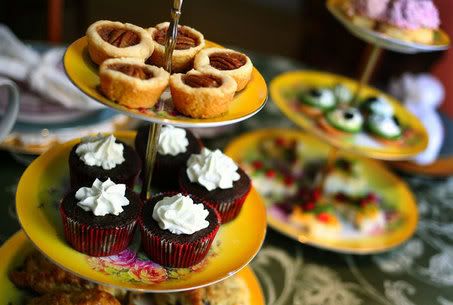
My apologies if anyone gained ten pounds looking at that picture like I just did. Today's topic is not going to be about the pros and cons of choosing a good dessert--though that is one of the most important meals of the day.
In my personal opinion, every writer has a voice, a way they present their prose and stories that is distinctive to them. This "voice" is developed over years. Years. But that's a topic for another day all its own.
What many writers do not realize is what makes up a voice. It's not a one-source product. A voice is typically a combination of aspects. This can include lifestyle experience, personality, reading preference, genre niche, and the writer's own personal flair or style.
The latter is the most important, the building blocks for all the rest. So far in my reading and personal writing, I have found three styles that writers tend to lean toward. I'd love to give you some technical terms, but I'd much rather have you remember them. Hence desserts.
The first style is Cheesecake style.
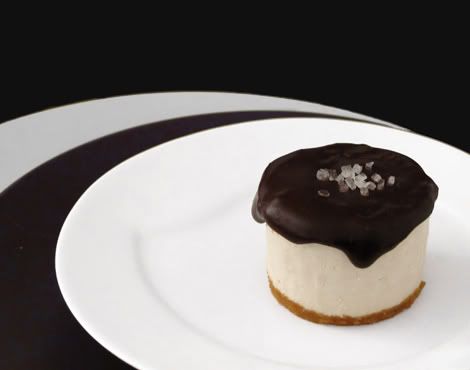
Cheesecake is simple elegance. Though some may be swirled with chocolate or topped with fruit, the cheesecake is still a relatively straightforward dessert. Nothing too dramatic added, nothing extravagant used to "dress it up", this dessert is delicious just as it is.
This is the "minimalist" style. Writers in this mode write crisp, concise prose with a minimum of description, both of characters and of settings. Not that there's a lack of description, but each word and phrase is chosen with great care and rarely slips into "purple prose". Motivations are clear and sharp.
A great deal of literary fiction would fall into this category. The author that comes to mind as the epitome of such would be Ernest Hemingway and his famous 6-word story on baby shoes.
Second style would be Tiramisu.
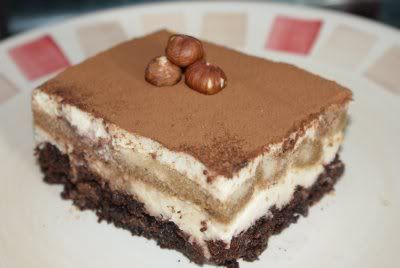
This dessert works in layers. Each layer of chocolate, coffee-soaked lady fingers, whipped topping, and creamy filling work together as a whole. This is richer than cheesecake, but not overpowering. And best appreciated in slow but steady bites.
This is the main component of my voice. This style of writing involves layers. Descriptions are more vivid and detailed than with cheesecake, but not overwhelming. Prose is more likely to flow gently along, leading the reader forward step by step. Motivations and plot may feel slightly mingled, but clarify into distinct layers as one pushes forward.
Mystery is one genre that lends well to this style, though many other genres fit into this category as well. A famous author that is a tiramisu writer is Patrick Rothfuss with his Kingkiller Chronicles.
Last is the style of Death by Chocolate.
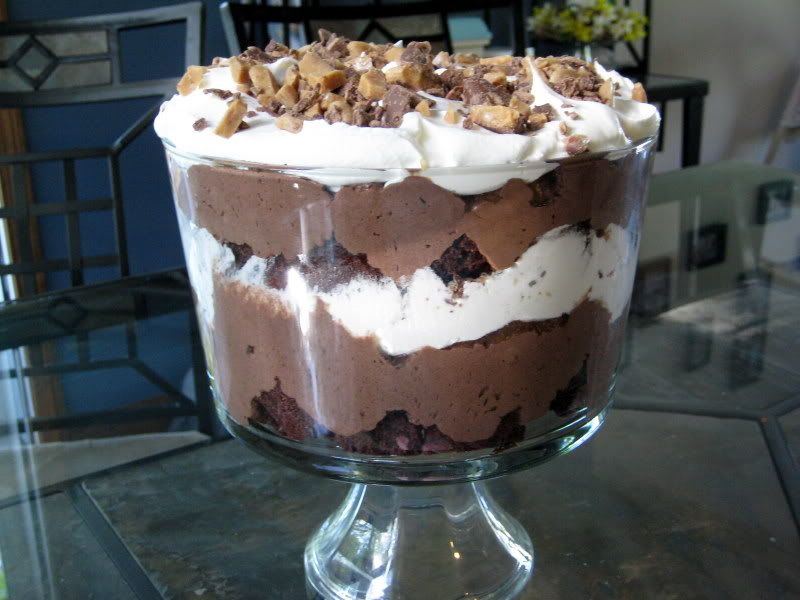
This dessert is by its own name, a work of decadence. Rich chocolate, creamy whipped topping, fluffy coffee cake, and crunchy toffee bars together make this dish a work of art. This would be something you might eat during an anniversary or perhaps during a date, or perhaps because of a lack of a date...
This is the lavish writing style. These are writers who use "purple prose" but to perfection. Descriptions are heavily detailed and given large attention, down to the very food a main character eats or the brand of shoes they wear. Prose is devoted more to making a world and character come alive than to the plot, many times. The plot itself winds in complex ways, with rich character interaction and an extravagant approach to emotions and events.
Most genres can fit into this category, but I see the most of this in speculative fiction, as well as somewhat in horror and thriller/suspense. I consider Dean Koontz to be an epitome of such prose.
Each of these personal styles will influence your voice and your way of presenting a story. However, just because you are a cheesecake writer doesn't mean you cannot interject a little tiramisu layers. Nor should a death by chocolate writer lament the luxurious world they've created as being too much. A good writer should mix elements of all three styles into their work.
The best thing is to be aware what style you prefer, to know where your strength is, and where you might be weak and need to incorporate more of the other "desserts" into your prose.
Friday, May 27, 2011
Flogging Friday
As has been mentioned in my fellow writer friend (and regular friend) on her blog, Sharp Angle -- today at the Writer's Digest forum we have a special guest.
The editor, Ray Rhemey, of the website Flogging the Quill. He is going to be answering questions about writing, publishing, and everything in between. Also, he is going to be flogging (that is critiquing as he does on his regular website) the first 16 lines of various openings.
It's open to anyone, so come on down. The only restriction is that you must have an account with WD. This is just to protect the works of the writers who have put blood, sweat, tears, and lots of coffee into their openings. But the account is free and takes less than a minute to set up. So, what are you waiting for?
If you need further instructions on how to create an account, please check out the link to Lydia Sharp's blog, as she gives a very detailed step-by-step guideline. See you there.
The editor, Ray Rhemey, of the website Flogging the Quill. He is going to be answering questions about writing, publishing, and everything in between. Also, he is going to be flogging (that is critiquing as he does on his regular website) the first 16 lines of various openings.
It's open to anyone, so come on down. The only restriction is that you must have an account with WD. This is just to protect the works of the writers who have put blood, sweat, tears, and lots of coffee into their openings. But the account is free and takes less than a minute to set up. So, what are you waiting for?
If you need further instructions on how to create an account, please check out the link to Lydia Sharp's blog, as she gives a very detailed step-by-step guideline. See you there.
Monday, May 16, 2011
Mind of Babes
I and many of my fellow writers are afflicted with a terrible disorder: writer-side-stuck-onia. That is, the inability to shut off the writer half of their brain in any situation--be it serious like a funeral or mundane like a hard day at work.
Raise your hand if you've ever caught yourself dissecting a book's plot, a movie's plausibility, someone's conversation as inappropriately-worded dialogue. Go on, raise your hands.
Yep. I'm sorry, but most of you are already terminal.
In that train of thought, about a week ago, I was babysitting a toddler boy around three years old. We had played a few games already with bubbles, Play-Doh and the like. I ran out of games, of course. Mostly because I was bored, not the boy.
One of his playsets is a castle, with multiple doors, gates, and trapdoors. Since this child loves peek-a-boo, I put my hands at the back of the castle, scratched at the doors, and then poked my fingers out of the opening with fake growling sounds. The boy squealed of course as any child abruptly "booed" and then grinned. He liked being scared, as most of us do.
No, this is not a foray into Family Files. I'm going somewhere with this. Promise.
Since I have writer-side-stuck-onia, I of course thought of this situation with my writer's side murmuring.
My fingers were not scary, per say. In the situation, the boy was perfectly safe and in no danger. Why did it startle him? The actual "monster" was nothing at all, but the tension built before the monster appeared with my scratching (foreshadow) and the anticipation (suspense) of my fingers' reappearance.
Hmm. Looks like a writer formula for success. If you warn the reader of impending doom/danger for the character, and then mingle it with the villain/monster/obstacle's arrival, you create tension. Using it in scenes that need tension should then allow each scene to draw the reader forward. Breaking it down:
And any good formula can be tested. Let's see:
Lord of the Rings: Fellowship
Firefly: Bushwacked
Foreshadow: Wander through derelict ship, everything left behind +
Suspense: Find a host of dead bodies =
Tension: Someone/something jumps out at one of the characters. (I nearly screamed)
This formula seems to work for me. Check out your favorite books or movies, and the scenes that left you feeling bound up in knots of dread and fear. Dissect them. I'll bet you can find the same formula.
Prove me wrong.
Raise your hand if you've ever caught yourself dissecting a book's plot, a movie's plausibility, someone's conversation as inappropriately-worded dialogue. Go on, raise your hands.
Yep. I'm sorry, but most of you are already terminal.
In that train of thought, about a week ago, I was babysitting a toddler boy around three years old. We had played a few games already with bubbles, Play-Doh and the like. I ran out of games, of course. Mostly because I was bored, not the boy.
One of his playsets is a castle, with multiple doors, gates, and trapdoors. Since this child loves peek-a-boo, I put my hands at the back of the castle, scratched at the doors, and then poked my fingers out of the opening with fake growling sounds. The boy squealed of course as any child abruptly "booed" and then grinned. He liked being scared, as most of us do.
No, this is not a foray into Family Files. I'm going somewhere with this. Promise.
Since I have writer-side-stuck-onia, I of course thought of this situation with my writer's side murmuring.
My fingers were not scary, per say. In the situation, the boy was perfectly safe and in no danger. Why did it startle him? The actual "monster" was nothing at all, but the tension built before the monster appeared with my scratching (foreshadow) and the anticipation (suspense) of my fingers' reappearance.
Hmm. Looks like a writer formula for success. If you warn the reader of impending doom/danger for the character, and then mingle it with the villain/monster/obstacle's arrival, you create tension. Using it in scenes that need tension should then allow each scene to draw the reader forward. Breaking it down:
Foreshadow + Suspense = Tension.
And any good formula can be tested. Let's see:
Lord of the Rings: Fellowship
Foreshadow: Gandalf warns of Black Rider arrival +
Suspense: Black Rider appears on the path =
Tension: Race to the dock with Black Riders chasing. (My heart was pounding)
Suspense: Black Rider appears on the path =
Tension: Race to the dock with Black Riders chasing. (My heart was pounding)
Firefly: Bushwacked
Foreshadow: Wander through derelict ship, everything left behind +
Suspense: Find a host of dead bodies =
Tension: Someone/something jumps out at one of the characters. (I nearly screamed)
This formula seems to work for me. Check out your favorite books or movies, and the scenes that left you feeling bound up in knots of dread and fear. Dissect them. I'll bet you can find the same formula.
Prove me wrong.
Monday, April 4, 2011
Timing Is Everything
This topic has been ruminating in my mind recently after attempting to read a book by a normally good author. It was also brought up in the writer's forum I frequent as an annoyance by other readers.
Namely, the way an author introduces graphic content, or topics of more sensitive nature. This could and likely would include torture, rape, child abuse, experimentation of any kind, gore, severe violence, and the list could go on forever.
Many authors seem to think that putting such things on the first chapter, first page, even first sentence, is a good way to hook a reader. In some ways, this could be true. It does create instant sympathy for the victim, or instant hatred for the perpetrator. But it's more of a Russian roulette. Chances are very high that doing so creates an opposite effect. It is a very bad idea to alienate your audience.
Commercial break: One rule of thumb that applies to anything a writer does... if it turns off the reader(s), don't do it. Period.
Now let me be very clear. I am not saying to avoid writing on such topics. On the contrary, if a story demands less than pleasant situations in order to drive your characters to their best, so be it.
But learn to use good timing.
Let me explain by comparing two books which deal with nearly the same situation. I've read the book "Hunter of Worlds" by C.J. Cherryth and attempted "Stewards of the Flame" by Syliva Engdahl.
Both of these books have an MC who is abruptly taken by a group in power, and various alterations, indignities, and implants are done to them. Unwilling. (this may not bother some people, but it does me) Both authors deal with the same somewhat uncomfortable topic, but I only managed to finish one book--Cherryth's book; the other filled me with nausea.
Why the difference? How the author handled it. Cherryth timed her revelation of the unpleasant situations carefully, in a manner that gave me (the reader) the ability to handle and finish the book. Engdahl, though one of my favorite YA writers, did not, in my opinion.
Here's three things I've noticed. I consider them general guidelines, at least in my experience as a reader and a writer.
1. Do not start with the uncomfortable/frightening/graphic topic. Not in the first paragraph, not on the first page. I'll go so far as to say, not even in the first chapter.
Once you create a knee-jerk reaction, it is extremely difficult to overcome a reader's "eww" response. Books tend to end up back on bookstore shelves.
In Cherryth's book, the alterations and etc are performed in the third chapter. Engdahl's work has it within the first five pages or so.
2. Foreshadowing is your friend. If you are going to introduce a hard-to-swallow topic, make sure you give the reader ample preparation. It is easier to handle something that I'm prepared for than to have it thrust upon me.
Being prepared for a flu shot...being jabbed unexpectedly by a needle. Big difference between the two, isn't there?
Both books do possess foreshadowing, hints of things to come, but the pacing is all wrong. Engdahl has only a handful of hints before the dreaded events begin. Since there is very little time for the foreshadowing to unfold, I was more appalled, shocked, and disgusted than anything else.
Three chapters in the other book gives a great deal of room. By the time it happened, though I didn't enjoy it per say, I was more saddened and concerned for the character.
3. Build a relationship between character(s) and reader. If all a reader has is a name, maybe a general face, and then abruptly that character is running from a rapist, it is very hard for me to continue reading, to put myself through that rough/painful scene for a character I don't even know.
On the other hand, if I've seen this character be kind to a young child, seen some of his/her hopes and dreams, care for an elderly relative, etc, and now they're running from a rapist--now I care, I want to read to see how the character escapes.
Make me care about the character and I'll be willing to follow wherever the story leads.
To sum up, check out this video. This circus act only works because of one thing.
Namely, the way an author introduces graphic content, or topics of more sensitive nature. This could and likely would include torture, rape, child abuse, experimentation of any kind, gore, severe violence, and the list could go on forever.
Many authors seem to think that putting such things on the first chapter, first page, even first sentence, is a good way to hook a reader. In some ways, this could be true. It does create instant sympathy for the victim, or instant hatred for the perpetrator. But it's more of a Russian roulette. Chances are very high that doing so creates an opposite effect. It is a very bad idea to alienate your audience.
Commercial break: One rule of thumb that applies to anything a writer does... if it turns off the reader(s), don't do it. Period.
Now let me be very clear. I am not saying to avoid writing on such topics. On the contrary, if a story demands less than pleasant situations in order to drive your characters to their best, so be it.
But learn to use good timing.
Let me explain by comparing two books which deal with nearly the same situation. I've read the book "Hunter of Worlds" by C.J. Cherryth and attempted "Stewards of the Flame" by Syliva Engdahl.
Both of these books have an MC who is abruptly taken by a group in power, and various alterations, indignities, and implants are done to them. Unwilling. (this may not bother some people, but it does me) Both authors deal with the same somewhat uncomfortable topic, but I only managed to finish one book--Cherryth's book; the other filled me with nausea.
Why the difference? How the author handled it. Cherryth timed her revelation of the unpleasant situations carefully, in a manner that gave me (the reader) the ability to handle and finish the book. Engdahl, though one of my favorite YA writers, did not, in my opinion.
Here's three things I've noticed. I consider them general guidelines, at least in my experience as a reader and a writer.
1. Do not start with the uncomfortable/frightening/graphic topic. Not in the first paragraph, not on the first page. I'll go so far as to say, not even in the first chapter.
Once you create a knee-jerk reaction, it is extremely difficult to overcome a reader's "eww" response. Books tend to end up back on bookstore shelves.
In Cherryth's book, the alterations and etc are performed in the third chapter. Engdahl's work has it within the first five pages or so.
2. Foreshadowing is your friend. If you are going to introduce a hard-to-swallow topic, make sure you give the reader ample preparation. It is easier to handle something that I'm prepared for than to have it thrust upon me.
Being prepared for a flu shot...being jabbed unexpectedly by a needle. Big difference between the two, isn't there?
Both books do possess foreshadowing, hints of things to come, but the pacing is all wrong. Engdahl has only a handful of hints before the dreaded events begin. Since there is very little time for the foreshadowing to unfold, I was more appalled, shocked, and disgusted than anything else.
Three chapters in the other book gives a great deal of room. By the time it happened, though I didn't enjoy it per say, I was more saddened and concerned for the character.
3. Build a relationship between character(s) and reader. If all a reader has is a name, maybe a general face, and then abruptly that character is running from a rapist, it is very hard for me to continue reading, to put myself through that rough/painful scene for a character I don't even know.
On the other hand, if I've seen this character be kind to a young child, seen some of his/her hopes and dreams, care for an elderly relative, etc, and now they're running from a rapist--now I care, I want to read to see how the character escapes.
Make me care about the character and I'll be willing to follow wherever the story leads.
To sum up, check out this video. This circus act only works because of one thing.
Timing
Monday, March 21, 2011
Book Rave: Wise Man's Fear
I've been awaiting--eagerly awaiting--this second book in the series called the Kingkiller Chronicles. Some of you may remember my guest book review of the first book, Name of the Wind by Patrick Rothfuss, here.
The day the second one, Wise Man's Fear, was released, I bought it. And believe me, I do not do that easily. And I was not disappointed.
The second book delivers just as good, if not better, then the first one. Kvothe continues to reveal more of his life story. The young version of himself is charming and bold, headstrong and often foolish, but he's maturing too. And learning amazing skills.
While the older version continues to spin out secrets and strange things that don't seem to "quite" connect with who he used to be. The two together work very well to keep this reader continually guessing and wondering, rather than solving the mystery quickly (as seems to happen to me in most fantasy novels)
Just as I mentioned in the first one, Rothfuss reveals a talent in balancing many different viewpoints, all in the same book. He sticks to a traditional/conventional storyline, but this is what makes this story shine. I much prefer a story that unfolds in a typical way, but then throws me for a loop here and there, then one that is so strange and outlandish I could never keep it straight.
The characters are awesome. Some characters faded into the background, somewhat, such as Ambrose and Aureli, while others took prominent center stage. Such as Bast. I am honestly finding Bast to be "sometimes" more interesting than Kvothe. Especially after the last scene in the book. Which I won't share.
The world-building here is excellent as well. My favorite is the Ademic culture, with the dramatic pauses and hand language that sets them apart. The traditions behind iron, silver, gold, bone, and etc rings in another locale is just as fascinating, and fits together nicely.
This is an exceptional, five-star fantasy. If you don't have it already, go out and get it and the first book. It's worth the money and the time to read.
The day the second one, Wise Man's Fear, was released, I bought it. And believe me, I do not do that easily. And I was not disappointed.
The second book delivers just as good, if not better, then the first one. Kvothe continues to reveal more of his life story. The young version of himself is charming and bold, headstrong and often foolish, but he's maturing too. And learning amazing skills.
While the older version continues to spin out secrets and strange things that don't seem to "quite" connect with who he used to be. The two together work very well to keep this reader continually guessing and wondering, rather than solving the mystery quickly (as seems to happen to me in most fantasy novels)
Just as I mentioned in the first one, Rothfuss reveals a talent in balancing many different viewpoints, all in the same book. He sticks to a traditional/conventional storyline, but this is what makes this story shine. I much prefer a story that unfolds in a typical way, but then throws me for a loop here and there, then one that is so strange and outlandish I could never keep it straight.
The characters are awesome. Some characters faded into the background, somewhat, such as Ambrose and Aureli, while others took prominent center stage. Such as Bast. I am honestly finding Bast to be "sometimes" more interesting than Kvothe. Especially after the last scene in the book. Which I won't share.
The world-building here is excellent as well. My favorite is the Ademic culture, with the dramatic pauses and hand language that sets them apart. The traditions behind iron, silver, gold, bone, and etc rings in another locale is just as fascinating, and fits together nicely.
This is an exceptional, five-star fantasy. If you don't have it already, go out and get it and the first book. It's worth the money and the time to read.
Tuesday, February 15, 2011
Dragon Day
Today has been a hectic day for me, and I've got several stories yearning for my attention. So, rather than give detailed reviews today (though I will later on this week) I'm going to list a handful of my favorite books.
More specifically, those centered around the theme or featuring my favorite fantasy creature. Dragons.
And check out the awesome cover art.
Dragon's Blood: Book 1 of Pit Dragon Chronicles by Jane Yolen. (This was my first introduction to dragons as a young person. It's classified as YA, but believe me, it works for adults too. Still re-read these.)
His Majesty's Dragon: Book 1 of Tremaire Series by Naomi Novik. (Excellent alternate history. What if the Napoleonic era including dragons as the main air force for the Brits? History professor/teacher writes them. A little on the lecture side at times, but loved the wit and intelligence of the dragons)

Dragon Champion: Book 1 of Age of Fire series by E. E. Knight (It's pretty much a description of the coming-of-age of three dragon siblings. It stands above the rest, IMHO, for its originality -- the dwarves have glowing beards for example--and for the unique viewpoint through the dragon's eyes. The way it's handled is quite...different.)

More specifically, those centered around the theme or featuring my favorite fantasy creature. Dragons.
And check out the awesome cover art.
Dragon's Blood: Book 1 of Pit Dragon Chronicles by Jane Yolen. (This was my first introduction to dragons as a young person. It's classified as YA, but believe me, it works for adults too. Still re-read these.)
 |
His Majesty's Dragon: Book 1 of Tremaire Series by Naomi Novik. (Excellent alternate history. What if the Napoleonic era including dragons as the main air force for the Brits? History professor/teacher writes them. A little on the lecture side at times, but loved the wit and intelligence of the dragons)
Dragon Champion: Book 1 of Age of Fire series by E. E. Knight (It's pretty much a description of the coming-of-age of three dragon siblings. It stands above the rest, IMHO, for its originality -- the dwarves have glowing beards for example--and for the unique viewpoint through the dragon's eyes. The way it's handled is quite...different.)
Wednesday, February 9, 2011
Book Rave: Shadows and Light Anthology II
Taking a break from the "Sargas Chronicles" to applaud some hard work by Pill Hill Press.
I have always had a love/hate relationship with anthologies. Typically, in my experience, an anthology combines a plethora of bad to terrible stories, intermixed with a scant few good stories. I'm happy to say this anthology was the reverse.
When a writer friend of mine, Lydia Sharp, suggested I try it and mentioned her story was included in the collection, (Spread Your Wings And Die) I gulped and took the plunge with my Kindle. And was happily surprised. (Since I already have a pile of Noble-prize nomination anthologies in my "to-be-hurled-against-wall" stack)
Out of thirteen stories, I only found one that I disliked, and even that one was put together flawlessly, I just didn't like how it ended, as a reader. The anthology had a nice, slick look to it in the digital edition. Even though I missed out on the fancier font I've been told is in the print edition, the collection is so good that I'll likely purchase that one as well.
I am proud to say this anthology is the first book I've read this year to receive a 5-star rating from me. I actually had to make myself put it away before I didn't get any writing done for the day.
Definitely going to be looking for digital versions of the other anthologies by Pill Hill Press.
And here's some jazzy links if you want to try a sample.
Kindle Edition
Print Edition
I have always had a love/hate relationship with anthologies. Typically, in my experience, an anthology combines a plethora of bad to terrible stories, intermixed with a scant few good stories. I'm happy to say this anthology was the reverse.
When a writer friend of mine, Lydia Sharp, suggested I try it and mentioned her story was included in the collection, (Spread Your Wings And Die) I gulped and took the plunge with my Kindle. And was happily surprised. (Since I already have a pile of Noble-prize nomination anthologies in my "to-be-hurled-against-wall" stack)
Out of thirteen stories, I only found one that I disliked, and even that one was put together flawlessly, I just didn't like how it ended, as a reader. The anthology had a nice, slick look to it in the digital edition. Even though I missed out on the fancier font I've been told is in the print edition, the collection is so good that I'll likely purchase that one as well.
I am proud to say this anthology is the first book I've read this year to receive a 5-star rating from me. I actually had to make myself put it away before I didn't get any writing done for the day.
Definitely going to be looking for digital versions of the other anthologies by Pill Hill Press.
And here's some jazzy links if you want to try a sample.
Kindle Edition
Print Edition
Monday, January 17, 2011
Avoid This Contest and Publishing House
I'm not even going to compose much of a post, as Janet Reid states much more eloquently than I can all the wrong things going on with First One Publishing's new contest.
Other blogs, such as Enigma Inklings, have also mentioned it. Please, spread it around and post it if possible where other aspiring writers might be lurking. This contest is nothing more than a way to rip-off money and ALL publishing rights from new writers. (Oh yes, they ask for ALL rights, for eternity. Seriously bad contest) Oh, and did I mention the $150, non-refundable fee just for entering?
Check out this POST
Other blogs, such as Enigma Inklings, have also mentioned it. Please, spread it around and post it if possible where other aspiring writers might be lurking. This contest is nothing more than a way to rip-off money and ALL publishing rights from new writers. (Oh yes, they ask for ALL rights, for eternity. Seriously bad contest) Oh, and did I mention the $150, non-refundable fee just for entering?
Check out this POST
Saturday, January 15, 2011
Sargas Chronicles: Part 3
The Pay-Off
As has been discussed in previous posts on this blog, the creation of your villain is as important as the creation of your main character/hero. And, just as your hero should have his finale, your villain should have the pay-off.
Once you've created a suitable villain, allowed him to rampage through the book/story, and nearly defeat your hero, it's time to unveil his ultimate defeat. But first you must ensure that this defeat connects sufficiently with your reader's automatic sense of justice.
No one likes to feel cheated. But especially so in a good story. A note to the wise:
If your end lacks the punch and pizazz that you've built up throughout your story, a reader tends to feel cheated, deflated, and with a bad taste in their mouth. This also holds for the "end" of a character arc, including your villains' own.
Here's an example.The movie Indiana Jones and the Temple of Doom.
How would you feel if the leader of the cult, rather than falling to his death among the crocodiles, climbed up the ladder and was taken away by local police? Would you feel cheated?
YES!
Because after the build-up of how awful and terrible that villain was, you want him to die, and you want him to die in a way that is equal to the pain and suffering he has caused.
That's because of most people's inborn sense of justice. When most people were toddlers, and someone took your toy, you took it back. When they bit you, you bit back.
Equal punishment.
Though we know that's not true in real life, in books, most people wish to see equal or even greater punishment fall on those who have done wrong.
Making your villain truly despicable, someone your readers can hate with as much vehemence as they love your hero, is always a good idea. Just remember that when the end comes, when you finally have your villain face his/her defeat, that the pay-off is just as terrible as the build-up you've created.
As has been discussed in previous posts on this blog, the creation of your villain is as important as the creation of your main character/hero. And, just as your hero should have his finale, your villain should have the pay-off.
Once you've created a suitable villain, allowed him to rampage through the book/story, and nearly defeat your hero, it's time to unveil his ultimate defeat. But first you must ensure that this defeat connects sufficiently with your reader's automatic sense of justice.
No one likes to feel cheated. But especially so in a good story. A note to the wise:
The last thing a reader remembers is the end.
If your end lacks the punch and pizazz that you've built up throughout your story, a reader tends to feel cheated, deflated, and with a bad taste in their mouth. This also holds for the "end" of a character arc, including your villains' own.
Here's an example.The movie Indiana Jones and the Temple of Doom.
How would you feel if the leader of the cult, rather than falling to his death among the crocodiles, climbed up the ladder and was taken away by local police? Would you feel cheated?
YES!
Because after the build-up of how awful and terrible that villain was, you want him to die, and you want him to die in a way that is equal to the pain and suffering he has caused.
That's because of most people's inborn sense of justice. When most people were toddlers, and someone took your toy, you took it back. When they bit you, you bit back.
Equal punishment.
Though we know that's not true in real life, in books, most people wish to see equal or even greater punishment fall on those who have done wrong.
Making your villain truly despicable, someone your readers can hate with as much vehemence as they love your hero, is always a good idea. Just remember that when the end comes, when you finally have your villain face his/her defeat, that the pay-off is just as terrible as the build-up you've created.
Tuesday, December 28, 2010
Sargas Chronicles: Part 2
Villain Character Arc
First, a quick refresher of the three main definitions I'm working with.
Protag/Hero: The one with the most to lose -- the main character (Frodo, Will Turner)
Antag.: Oppose the Hero -- supporting characters to the villain (Gollum, Norrington)
Villain: The one with the most to gain -- the main "bad guy" (Sauron, Davy Jones)
A little sidenote: one way to clarify between villain and antagonist. An antagonist can, and often will, switch sides. Norrington was an antagonist, then became a good guy. Gollum briefly changes to Frodo's side.
Villains never switch truly. (Sauron, Davy Jones, Palpatine)
Hopefully, by now you have already or are planning to read at least a few writing books on the craft. If not, I won't shun you, but it's a very good idea to do so. Especially written by the same authors that you like to read--since you likely share some of their preferences and stylings.
If you have read, then this is a good refresher. Or you can just hop on down to near the bottom.
Character arcs are simply, the pathway of change.
That is, your Hero absolutely must start at point A in his personality/knowledge/etc. and slowly be changed by the progress of your story and events around him, so that when he reaches point B (or C, or D) he is no longer the same Hero.
sidenote: If there is no character change...there is no story. 'Nuff said.
The most common format is a three-part arc, though you can have as many parts as you like. Most of humanity seems hard-wired to find a sort of symmetry in three pieces though. (Three Little Pigs, Three Bears, Three Wishes....Four Pigs just doesn't have the same ring, does it?)
In your Hero's character arc, he should begin at the point of change, when some external or internal event (though typically the former) prompts him to change his locale, his mood, his action, his emotion, etc. This is the baseline of your arc.
Examples: When Frodo receives the ring, when Elizabeth is kidnapped, when Luke cleans C-3PO...
A arc then as rising or mounting action, where the change prompts another change, and another. In the process there should always be at least one, if not multiple, problems. (3 is usually a good number...) And each problem is harder to defeat than the next.
Examples: Crossing the Dead Marshes/Black Gate is Closed, Jack Sparrow's trickery, Imperial troops...
The final problem is the climax. Directly before this final problem (which your Hero should find a way to defeat) should fall your lowest portion of your arc, when all seems lost. Everything should come crashing down around your Hero.
Examples: Frodo stung by Shelob/collapsed on Mt. Doom, Will captured by Bubossa in the cavern, trapped with Palpatine and Vader...
The Hero should then rise above it (finale/climax/resolution) and in so doing produce the final change. From there, either the story ends or there's a gradual tapering off that wraps things up.
Examples: Finale--ring tossed into lava, tapering into the return to the Shire/Grey Havens, Finale--freeing Bubossa from the curse, tapering into Will and Elizabeth running off together,
Finale--blowing up Death Star, tapering into the "medal ceremony" for Hans and Chewbacca.
But how does this apply to villains, you ask.
Just as the Hero has a character arc, a path of change. Did you know that villains (and to a lesser extent) antagonists alike have one? I don't mean the wishy-washy bad guy transforms into good arc either. Sauron has a character arc, and Bubossa, and Darth Vader and Palpatine.
There is one important thing to remember, however. Opposites.
Your Hero and Villain character arcs should interact and influence one another, but in utterly opposite ways. Every time your Hero succeeds, your Villain fails. Every time Hero fails, Villain succeeds.
I'm a visual sort of person, so, for your viewing pleasure: This is a simplistic graphic of two character arcs--the Hero and the Villain. There's blue for Hero and red for Villain, and when those mix, you get purple.

First, a quick refresher of the three main definitions I'm working with.
Protag/Hero: The one with the most to lose -- the main character (Frodo, Will Turner)
Antag.: Oppose the Hero -- supporting characters to the villain (Gollum, Norrington)
Villain: The one with the most to gain -- the main "bad guy" (Sauron, Davy Jones)
A little sidenote: one way to clarify between villain and antagonist. An antagonist can, and often will, switch sides. Norrington was an antagonist, then became a good guy. Gollum briefly changes to Frodo's side.
Villains never switch truly. (Sauron, Davy Jones, Palpatine)
Hopefully, by now you have already or are planning to read at least a few writing books on the craft. If not, I won't shun you, but it's a very good idea to do so. Especially written by the same authors that you like to read--since you likely share some of their preferences and stylings.
If you have read, then this is a good refresher. Or you can just hop on down to near the bottom.
Character arcs are simply, the pathway of change.
That is, your Hero absolutely must start at point A in his personality/knowledge/etc. and slowly be changed by the progress of your story and events around him, so that when he reaches point B (or C, or D) he is no longer the same Hero.
sidenote: If there is no character change...there is no story. 'Nuff said.
The most common format is a three-part arc, though you can have as many parts as you like. Most of humanity seems hard-wired to find a sort of symmetry in three pieces though. (Three Little Pigs, Three Bears, Three Wishes....Four Pigs just doesn't have the same ring, does it?)
In your Hero's character arc, he should begin at the point of change, when some external or internal event (though typically the former) prompts him to change his locale, his mood, his action, his emotion, etc. This is the baseline of your arc.
Examples: When Frodo receives the ring, when Elizabeth is kidnapped, when Luke cleans C-3PO...
A arc then as rising or mounting action, where the change prompts another change, and another. In the process there should always be at least one, if not multiple, problems. (3 is usually a good number...) And each problem is harder to defeat than the next.
Examples: Crossing the Dead Marshes/Black Gate is Closed, Jack Sparrow's trickery, Imperial troops...
The final problem is the climax. Directly before this final problem (which your Hero should find a way to defeat) should fall your lowest portion of your arc, when all seems lost. Everything should come crashing down around your Hero.
Examples: Frodo stung by Shelob/collapsed on Mt. Doom, Will captured by Bubossa in the cavern, trapped with Palpatine and Vader...
The Hero should then rise above it (finale/climax/resolution) and in so doing produce the final change. From there, either the story ends or there's a gradual tapering off that wraps things up.
Examples: Finale--ring tossed into lava, tapering into the return to the Shire/Grey Havens, Finale--freeing Bubossa from the curse, tapering into Will and Elizabeth running off together,
Finale--blowing up Death Star, tapering into the "medal ceremony" for Hans and Chewbacca.
But how does this apply to villains, you ask.
Just as the Hero has a character arc, a path of change. Did you know that villains (and to a lesser extent) antagonists alike have one? I don't mean the wishy-washy bad guy transforms into good arc either. Sauron has a character arc, and Bubossa, and Darth Vader and Palpatine.
There is one important thing to remember, however. Opposites.
Your Hero and Villain character arcs should interact and influence one another, but in utterly opposite ways. Every time your Hero succeeds, your Villain fails. Every time Hero fails, Villain succeeds.
I'm a visual sort of person, so, for your viewing pleasure: This is a simplistic graphic of two character arcs--the Hero and the Villain. There's blue for Hero and red for Villain, and when those mix, you get purple.
Saturday, December 18, 2010
The Sargas Chronicles: Part 1
Define "Villain"
As some of you may be aware of already, I am currently working on a second major rewrite of the science-fiction novel, Phoenix Rising. I'm not far off from my goal: finishing it by the New Year.
My focus, at the moment, is tightly on this novel. And, in the process, on the final chapters that deal with one of my favorite characters--Sargas. I've received from most of my beta readers a response that suggests I did something right with him. And, my hope is that talking about creating him will in turn help you craft better villains and antagonists. (Don't gasp. I know the v-word is a nasty thing to most writers anymore. And yes, I consider those two types to be separate classifications, rather than lumping them together. More on that in a moment)
This is more the introductory blog post, with some basic groundwork. The nitty gritty of character creation will come later.
First off, buy this book. The Sociopath Next Door by Martha Stout. It's relatively cheap. (ranges from about $5-$20 depending on if you want brand-new or slightly used)
Now, those of you that follow my blog know, I don't recommend a book lightly. And certainly do not state things so emphatically. But I'm very serious. If you write a story that has a bad guy...which pretty much means any writer...you need this book.
Even if your villain/antagonist is not a bona fide mental patient, he is likely going to have some of these qualities that Stout discusses. Don't believe me? Did you know that 4% of the human population has some form of sociopathy? That means out of every twenty-five people, one of them is likely at least mildly sociopathic. Name me any bad guy in a book, and I'll bet I can find a sociopathic quality in most of them. So seriously, this book is well worth the money. Every time I start a new novel now, I re-read it and use portions to create my bad guys.
Enough of that plug. On to classifications.
Most of you, I suspect, have read some of these "how-to-write" books, or subscribe to a writing magazine, or lurk in online writer's groups and forums. (which is good, by the way.) So you're inner writer is probably screaming right now at the word Villain. Am I right?
But, there is no such thing as a villain anymore. Someone who is inherently, undeniably evil...that's old school.
That's what you're thinking, isn't it? Well, in a sense this is true. And in a sense it isn't. Yes, you should never, ever have a guy who is evil simply for the sake of being evil, that is so nasty that there is no sympathy or way to like him.
Unfortunately, however, in our fear to drift into the "evil overlord" realm, the bad guys in most stories have grown weak and not really a challenge for our hero. And do we like to lack that challenge in a book? Ask the pile of books on my floor after being hurled at the wall. They'll give you a resounding no.
So, here's my take. There are three important types of characters in any story, four if you want to count the supporting character roles. You have your protagonist--or main character. (and supporting characters) You have your antagonist (which functions as a supporting character for...) Your villain.
Let me clarify now with some definitions, which are all personal opinion. First off, let's start with antagonists. In my mind, an antagonist is something or someone that in some way opposes or prevents your main character from fulfilling his goals. This can be something inanimate--the gulf of an ocean, the swath of desert, a mountain ridge--or another character--Gollum in LOtR, Commodore James Norrington in Pirates of the Caribbean, Vizzini in Princess Bride, etc.
These typically are minor setbacks/problem-makers. That is, for example, though Gollum causes problems and slows or even endangers Frodo and Sam and all the Fellowship, Gollum is not truly capable of causing utter defeat for any of them.
A protagonist and a villain have linked definitions. The protagonist is typically your main character, and the villain is typically the main problem. And their definitions are best revealed as follows:
This is why I separate the villain from the antagonist. To stick with my previous example: Gollum is a nasty guy, who does cause problems, but does he really have the most to lose? Oh yes, he needs that ring...but Sauron needs it more. Gollum would be miserable without it; Sauron would die.
The antagonist disrupts; the villain destroys. Now, this doesn't mean that your villain should be inherently evil. He still needs to have flaws and problems and a motive for doing what he does. But he needs to always be the most evil, the most powerful, the most dangerous, and the most driven, of all your bad guys.
The shadow of his influence should hang over your protagonist as an insurmountable problem. Where would Lord of the Rings be without Sauron? Where would Sea Wolf be without Captain Larsen? Where would Jungle Book be without Shere Khan?
Think about it.
As some of you may be aware of already, I am currently working on a second major rewrite of the science-fiction novel, Phoenix Rising. I'm not far off from my goal: finishing it by the New Year.
My focus, at the moment, is tightly on this novel. And, in the process, on the final chapters that deal with one of my favorite characters--Sargas. I've received from most of my beta readers a response that suggests I did something right with him. And, my hope is that talking about creating him will in turn help you craft better villains and antagonists. (Don't gasp. I know the v-word is a nasty thing to most writers anymore. And yes, I consider those two types to be separate classifications, rather than lumping them together. More on that in a moment)
This is more the introductory blog post, with some basic groundwork. The nitty gritty of character creation will come later.
First off, buy this book. The Sociopath Next Door by Martha Stout. It's relatively cheap. (ranges from about $5-$20 depending on if you want brand-new or slightly used)
Now, those of you that follow my blog know, I don't recommend a book lightly. And certainly do not state things so emphatically. But I'm very serious. If you write a story that has a bad guy...which pretty much means any writer...you need this book.
Even if your villain/antagonist is not a bona fide mental patient, he is likely going to have some of these qualities that Stout discusses. Don't believe me? Did you know that 4% of the human population has some form of sociopathy? That means out of every twenty-five people, one of them is likely at least mildly sociopathic. Name me any bad guy in a book, and I'll bet I can find a sociopathic quality in most of them. So seriously, this book is well worth the money. Every time I start a new novel now, I re-read it and use portions to create my bad guys.
Enough of that plug. On to classifications.
Most of you, I suspect, have read some of these "how-to-write" books, or subscribe to a writing magazine, or lurk in online writer's groups and forums. (which is good, by the way.) So you're inner writer is probably screaming right now at the word Villain. Am I right?
But, there is no such thing as a villain anymore. Someone who is inherently, undeniably evil...that's old school.
That's what you're thinking, isn't it? Well, in a sense this is true. And in a sense it isn't. Yes, you should never, ever have a guy who is evil simply for the sake of being evil, that is so nasty that there is no sympathy or way to like him.
Unfortunately, however, in our fear to drift into the "evil overlord" realm, the bad guys in most stories have grown weak and not really a challenge for our hero. And do we like to lack that challenge in a book? Ask the pile of books on my floor after being hurled at the wall. They'll give you a resounding no.
So, here's my take. There are three important types of characters in any story, four if you want to count the supporting character roles. You have your protagonist--or main character. (and supporting characters) You have your antagonist (which functions as a supporting character for...) Your villain.
Let me clarify now with some definitions, which are all personal opinion. First off, let's start with antagonists. In my mind, an antagonist is something or someone that in some way opposes or prevents your main character from fulfilling his goals. This can be something inanimate--the gulf of an ocean, the swath of desert, a mountain ridge--or another character--Gollum in LOtR, Commodore James Norrington in Pirates of the Caribbean, Vizzini in Princess Bride, etc.
These typically are minor setbacks/problem-makers. That is, for example, though Gollum causes problems and slows or even endangers Frodo and Sam and all the Fellowship, Gollum is not truly capable of causing utter defeat for any of them.
A protagonist and a villain have linked definitions. The protagonist is typically your main character, and the villain is typically the main problem. And their definitions are best revealed as follows:
The protagonist is always the one who has the most to lose.
The villain is always the one who has the most to gain.
The villain is always the one who has the most to gain.
This is why I separate the villain from the antagonist. To stick with my previous example: Gollum is a nasty guy, who does cause problems, but does he really have the most to lose? Oh yes, he needs that ring...but Sauron needs it more. Gollum would be miserable without it; Sauron would die.
The antagonist disrupts; the villain destroys. Now, this doesn't mean that your villain should be inherently evil. He still needs to have flaws and problems and a motive for doing what he does. But he needs to always be the most evil, the most powerful, the most dangerous, and the most driven, of all your bad guys.
The shadow of his influence should hang over your protagonist as an insurmountable problem. Where would Lord of the Rings be without Sauron? Where would Sea Wolf be without Captain Larsen? Where would Jungle Book be without Shere Khan?
Think about it.
Friday, November 19, 2010
Book Rave: FireStorm #1 of Dragon Orb Series
With the temperatures around my house hovering at 28 degrees, I've had plenty more time to work on my to-be-read pile. And of course, that means more reviews for you. Isn't that great?
Today is a special treat. I stumbled across this set of books on pure accident. While browsing writing.com, I found a snippet from UK author, Mark Robson's stories, read them, and adored them.
(writers, take note. "Social" and "writing" networking sites create an audience. I never would have purchased his book, if not for reading the little bit and chatting with him first.)
Firestorm is a dragon story, first and foremost. I've always held a special place in my reader heart for dragon stories, so this one was perfect to settle in to read while my fireplace warmed the chill from my bones.
The story is told with deft strokes, creating characters that have believable problems, dragons with credible weaknesses, and a plot that was at once familiar and yet kept me guessing.
This YA fantasy lacks nothing that I can possibly think of. I read it through in about two days, namely because each time I set it down, I had to read just "one more chapter". The story unfolds between riders who are discovering their dragons for the first time, especially one particular young lady, Nolita, who is swamped with a terrible phobia toward both heights and large beasts--not a good combination for any dragonrider.
Worse, when she and her friends finally do arrive at a mystic Oracle that maintains dragon and dragonrider society, Nolita discovers that she and three others must hunt out four orbs against all opposition, in order to save the Oracle. With her paralyzing terror of dragons, how can she possibly assist them in their life's quest?
The most interesting portion of the story, for me, was the classification of each dragon. I've seen them classed by color, size, temperament, and all sorts of things in many books. But instead, Robson chooses to use the idea of the time of day when the egg first hatched to determine the types. A dawn, day, dusk, and night dragon. And each dragon is the most powerful at those specific times. It made the story richer, and ensured a permanent sense of the "ticking clock" tension that I so love in stories I read.
The author, by the way, is a former pilot. This adds a huge amount of realism to the descriptions of flight, down to even the problems of thin air, freezing temperatures, and g-forces that many, many dragon stories completely ignore.
I've already planned to purchase the other three books and add them to my collection. Not only to support a fellow author, but also to enjoy an excellent series. This easily gets four stars from me, and I have a fair idea that rating will rise as I read the others in the series.
Today is a special treat. I stumbled across this set of books on pure accident. While browsing writing.com, I found a snippet from UK author, Mark Robson's stories, read them, and adored them.
(writers, take note. "Social" and "writing" networking sites create an audience. I never would have purchased his book, if not for reading the little bit and chatting with him first.)
Firestorm is a dragon story, first and foremost. I've always held a special place in my reader heart for dragon stories, so this one was perfect to settle in to read while my fireplace warmed the chill from my bones.
The story is told with deft strokes, creating characters that have believable problems, dragons with credible weaknesses, and a plot that was at once familiar and yet kept me guessing.
This YA fantasy lacks nothing that I can possibly think of. I read it through in about two days, namely because each time I set it down, I had to read just "one more chapter". The story unfolds between riders who are discovering their dragons for the first time, especially one particular young lady, Nolita, who is swamped with a terrible phobia toward both heights and large beasts--not a good combination for any dragonrider.
Worse, when she and her friends finally do arrive at a mystic Oracle that maintains dragon and dragonrider society, Nolita discovers that she and three others must hunt out four orbs against all opposition, in order to save the Oracle. With her paralyzing terror of dragons, how can she possibly assist them in their life's quest?
The most interesting portion of the story, for me, was the classification of each dragon. I've seen them classed by color, size, temperament, and all sorts of things in many books. But instead, Robson chooses to use the idea of the time of day when the egg first hatched to determine the types. A dawn, day, dusk, and night dragon. And each dragon is the most powerful at those specific times. It made the story richer, and ensured a permanent sense of the "ticking clock" tension that I so love in stories I read.
The author, by the way, is a former pilot. This adds a huge amount of realism to the descriptions of flight, down to even the problems of thin air, freezing temperatures, and g-forces that many, many dragon stories completely ignore.
I've already planned to purchase the other three books and add them to my collection. Not only to support a fellow author, but also to enjoy an excellent series. This easily gets four stars from me, and I have a fair idea that rating will rise as I read the others in the series.
Monday, August 9, 2010
On The Value of Valueless Contests
How is that for an oxymoron?
What I'm referring to are contests in which you don't win publication, or money, or even a signed book by Stephanie Meyers (I wonder if she uses glitter pens....)
Seriously though, I've found from the experience of my writer friends and other testimonials that these seemingly unworthy contests can help out your platform and your writing career. Take, for instance, Lydia Sharp. She has a give-away going on right now involving a free anthology, in which is published "The Blade of Tears."
That particular story actually won first place in a "site-based" contest. That is, one that involved bragging rights and a glittering icon...of a trophy. (Not Edward. Had you worried, didn't I?)
By hosting these contests with other writers, you can sometimes surprise yourself and develop a solid story that is publishable in the regular industry.
My take on it is that these type of contests often bring out the best in a writer. Because the pressure of winning, of receiving that publication, money, editor stalking rights, etc. is absent. All you have is good fun creating a story that people will love. And that, my friend, is what writing is all about.
So, enter those contests at the Writer's Digest Community, or Writer's Digest Forum, or Writing.com or wherever you may lurk when you're procrastinating today's writing goal. (Go on. Admit it. These sites are made for procrastination)
You just might craft the next story you get published.
What I'm referring to are contests in which you don't win publication, or money, or even a signed book by Stephanie Meyers (I wonder if she uses glitter pens....)
Seriously though, I've found from the experience of my writer friends and other testimonials that these seemingly unworthy contests can help out your platform and your writing career. Take, for instance, Lydia Sharp. She has a give-away going on right now involving a free anthology, in which is published "The Blade of Tears."
That particular story actually won first place in a "site-based" contest. That is, one that involved bragging rights and a glittering icon...of a trophy. (Not Edward. Had you worried, didn't I?)
By hosting these contests with other writers, you can sometimes surprise yourself and develop a solid story that is publishable in the regular industry.
My take on it is that these type of contests often bring out the best in a writer. Because the pressure of winning, of receiving that publication, money, editor stalking rights, etc. is absent. All you have is good fun creating a story that people will love. And that, my friend, is what writing is all about.
So, enter those contests at the Writer's Digest Community, or Writer's Digest Forum, or Writing.com or wherever you may lurk when you're procrastinating today's writing goal. (Go on. Admit it. These sites are made for procrastination)
You just might craft the next story you get published.
Monday, July 5, 2010
Check This Out!
A new anthology, called Eight Against Reality, by Panverse Publishing.

Many thanks to Lydia Sharp for revealing an anthology that works with novellas. (not a very common format in an anthology)
I am definitely intrigued by the idea, and hopefully will have my current fantasy novella edited/revised enough for future submissions possibly. We shall see.
In the meantime, I think it's awesome that Janice Hardy decided to host a contest giving away some copies of the anthology. Sounds like a win-win situation to me.
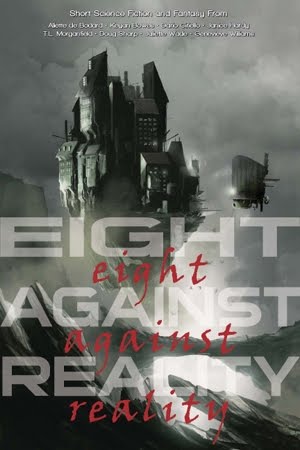
Many thanks to Lydia Sharp for revealing an anthology that works with novellas. (not a very common format in an anthology)
I am definitely intrigued by the idea, and hopefully will have my current fantasy novella edited/revised enough for future submissions possibly. We shall see.
In the meantime, I think it's awesome that Janice Hardy decided to host a contest giving away some copies of the anthology. Sounds like a win-win situation to me.
Wednesday, April 21, 2010
Comment Moderation
Unfortunately, due to a few spammers posting links to very inappropriate conduct on my blog, I've enabled the strict comment moderation. It's the only way I can see to keep such spammers away. My apologies to anyone who has to wait for me to approve a comment before it shows.
Ah, technology.
Ah, technology.
Subscribe to:
Posts (Atom)